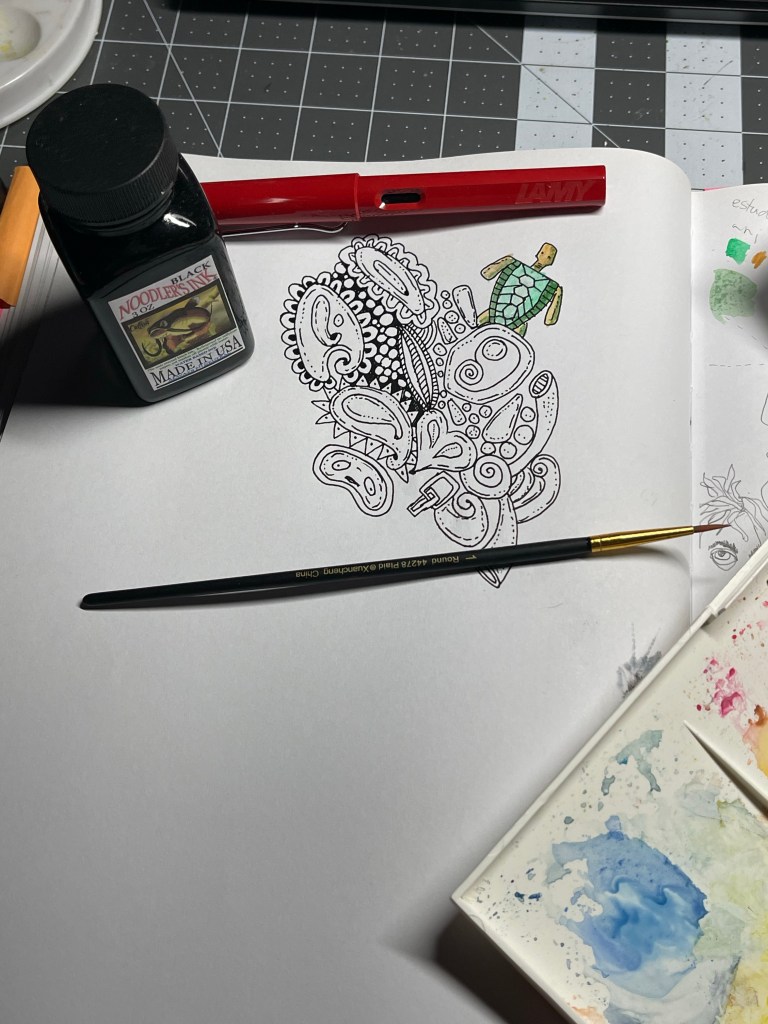
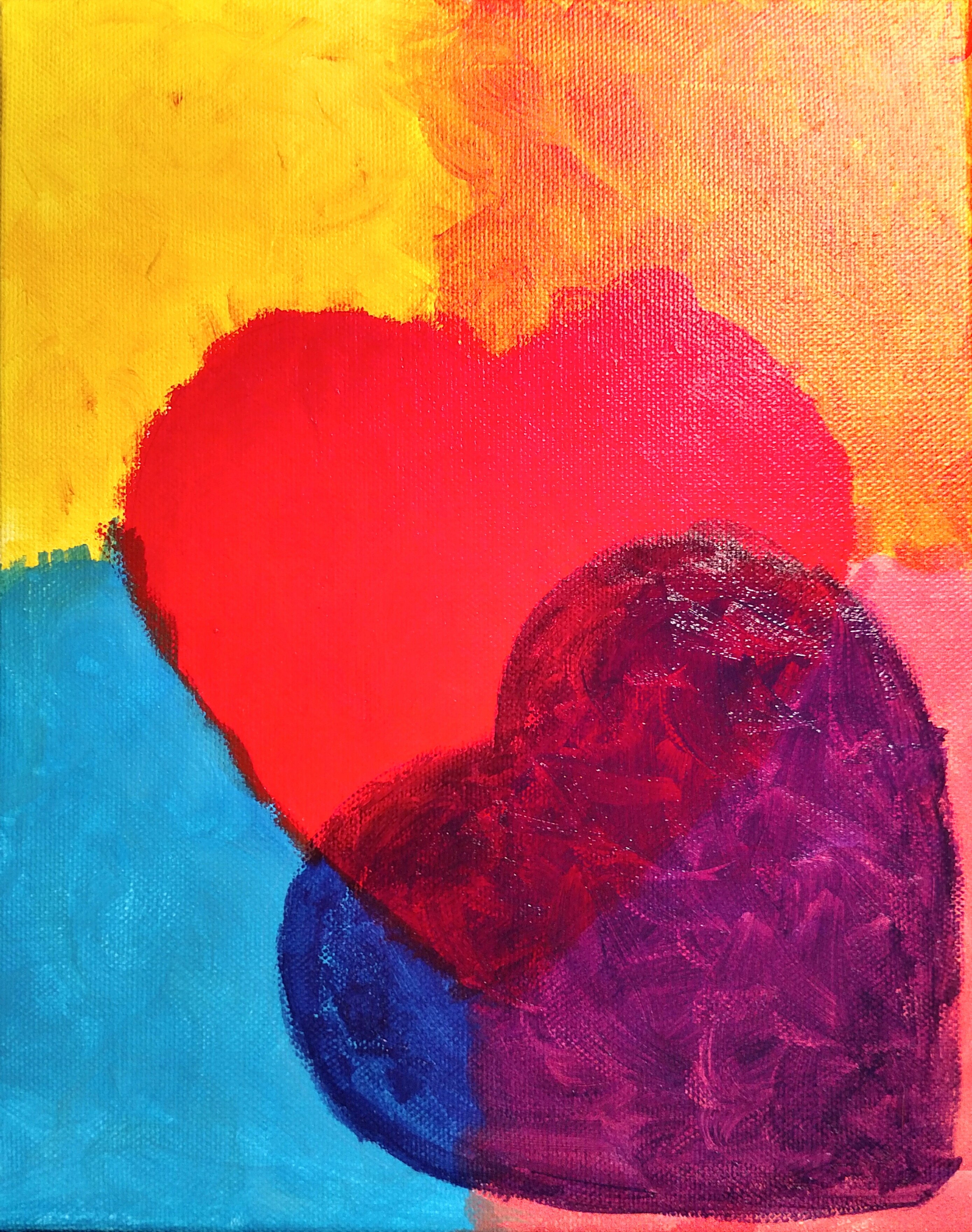
Fountain Pen Leaking Fun

Fountain pens are a great tool for artists who love to create beautiful drawings and paintings. They offer a unique writing experience that is unmatched by any other writing instrument. Many artists prefer fountain pens over other types of pens because they allow for more creativity and expression in their artwork.

One of the benefits of using a fountain pen with waterproof ink is the ability to paint over your drawings with watercolors. The waterproof ink ensures that your lines won’t bleed or smudge when you add watercolor paints on top. However, there are times when the fountain pen may leak all the ink out onto the paper, ruining your drawing and leaving you frustrated. In this blog post, we will explore the reasons why a fountain pen may leak waterproof ink when using a converter, and how to avoid this issue.

First, let’s talk about what a fountain pen converter is. A converter is a small device that allows you to fill your fountain pen with ink from a bottle, rather than using a pre-filled cartridge. It is a popular choice for fountain pen users who prefer to use their own inks or want to save money by buying ink in bulk.

When using a fountain pen converter with waterproof ink, there are a few things to keep in mind to avoid ink leakage. One reason why a fountain pen may leak with a converter is due to the quality of the converter. Some converters may not fit properly or may have small cracks that allow ink to leak out. It’s important to use a high-quality converter that fits snugly and securely in your fountain pen.

Another reason why a fountain pen may leak with a converter is due to the type of waterproof ink you are using. Some waterproof inks are thicker or more viscous than others, which can cause the ink to clog the converter or the pen’s feed mechanism. This can result in ink leakage and a ruined drawing. It’s important to choose a waterproof ink that is compatible with your fountain pen and converter.

To avoid ink leakage when using a fountain pen with waterproof ink and a converter, it’s important to follow a few simple steps. First, make sure your fountain pen and converter are clean and free of any debris or ink residue. This will ensure that the ink flows smoothly and doesn’t clog the converter or feed mechanism. Second, choose a high-quality converter that fits securely in your fountain pen. Finally, choose a waterproof ink that is compatible with your fountain pen and converter.

In conclusion, using a fountain pen with waterproof ink and a converter can be a great way to add depth and dimension to your artwork. However, it’s important to take care when choosing your converter and waterproof ink to avoid any issues with ink leakage. By following these simple steps, you can ensure that your fountain pen works smoothly, and your artwork is protected from any ink spills or leaks.
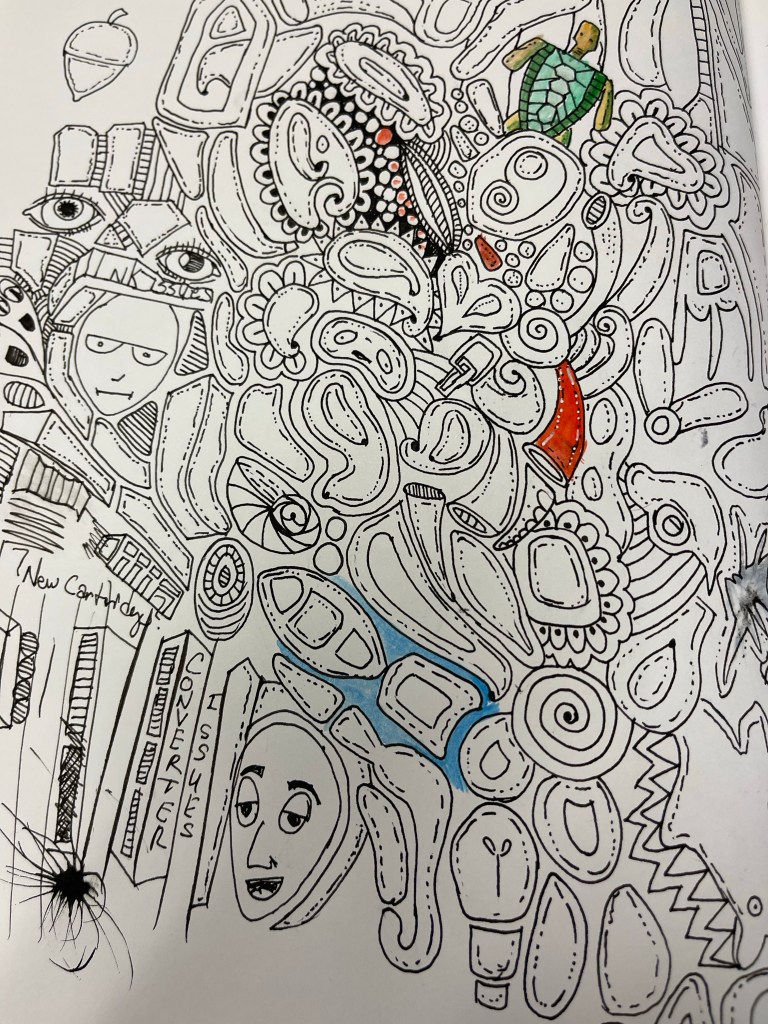
Just doodling around with my Lamy Safari fountain pen

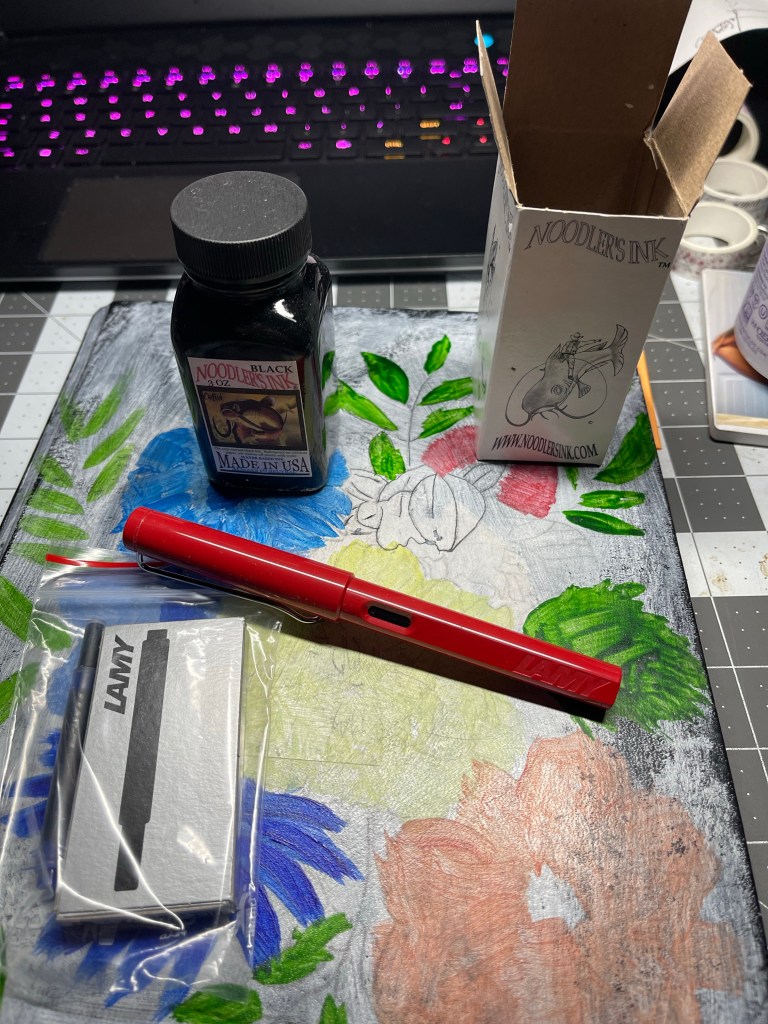
Red Lamy Safari Pen and Noodlers Black Ink

If you’re a fan of fountain pens, you know that a good pen and ink combination can make all the difference in your writing experience. Today, I want to share with you my thoughts on a particular pairing: the red Lamy fountain pen with Noodlers black ink in a bottle and a converter for the pen.

Lamy Safari | Red | Fine Nib + 5 Black Ink Cartridges and Converter

Let’s start with the pen itself. The Lamy fountain pen is a classic choice for fountain pen enthusiasts. It has a sleek design, a sturdy body, and a smooth nib that glides across paper effortlessly. The red color of this particular pen adds a touch of personality to your writing experience and stands out from the more traditional black or silver pens.

Now, let’s talk about the ink. Noodlers black ink is a popular choice for many fountain pen users. It’s a rich, dark ink that dries quickly and doesn’t smudge. It’s also waterproof, so you don’t have to worry about your writing fading or running if it gets wet.

To use Noodlers ink with the Lamy fountain pen, you’ll need a converter. This is a small device that fits into the pen and allows you to fill it with ink from a bottle rather than using disposable cartridges. The converter is easy to use, and it’s a more eco-friendly option than constantly buying and disposing of cartridges.

Together, the red Lamy fountain pen with Noodlers black ink in a bottle and a converter create a writing experience that’s both functional and enjoyable. The smooth flow of the ink complements the effortless writing experience of the pen, and the bold red color adds a pop of personality to your writing.

In conclusion, if you’re a fountain pen enthusiast looking for a reliable pen and ink combination, I highly recommend giving the red Lamy fountain pen with Noodlers black ink in a bottle and a converter a try. It’s a timeless pairing that’s sure to enhance your writing experience.

Learning to use Gouache Paints

As a beginner to gouache painting, I am excited about learning how to use the medium and gain experience as I try to paint with gouache. Gouache is a type of water-based paint that has a unique characteristic of being opaque, which makes it different from other watercolor paints. Here are some tips to get started with gouache painting.

Gouache paints can be found in tubes or pans, and it is essential to choose a good quality set to get started. You will also need watercolor paper, brushes, and a palette for mixing colors. I chose the Himi Gouache Paint with a set of 24 colors. It comes with three brushes, and I have many more brushes I have acquired over the years. I even got this cool canvas brush holder. The Himi Gouache paint set comes with a palette for mixing colors. Fortunately, I have several palettes both plastic and ceramic. Several years back I purchase some small ceramic saucers at a thrift store for very little money. I have several different watercolor paper pads and sheets. I have mainly been using the gouache, practicing really, in my sketchbook which I have no idea what the brand name is for the sketchbook. I have a couple of sets of palette knives I can use for mixing as well.
Gouache paint has a thicker consistency than watercolor, so it can be applied in layers over the previous layer without reactivating the lower layer. Allowing the previous layer to completely dry before applying the next layer and not using as much water and fewer brush strokes. Gouache colors can be mixed much like acrylic and oil paints.

One of the most important aspects of gouache painting is color mixing. It is essential to understand the primary colors and they interact with each other to create secondary and tertiary colors, much like of mediums such as acrylic and oil paints. I have plans to spend time practicing creating color swatch combinations using color swatches I get from stores like HomeDepot and Lowe’s.

Unlike watercolor, gouache allows you to layer colors without worrying about the previous layer reactivating for the most part. You can use this technique to build up the intensity of colors and create depth in your paintings.

As with any new medium, it’s natural to make mistakes. Gouache is a forgiving medium, and you can always paint over mistakes once the paint has dried. This has been my experience with other mediums as well. I have painted over my acrylic paintings more than once.

Gouache painting allows you to explore various techniques, such as wet-on-wet, wet-on-dry, and dry brush. You can also use different brushes to create different effects.

Practice makes progress, and the more you practice, the better you will become at gouache painting and art in general. Try to set aside some time each day to experiment with different techniques and create new paintings. My goal is to spend some time each night to draw and paint. I hope to see improvement over time.

In conclusion, gouache painting can be a fun and rewarding experience for beginners. With the right materials, understanding of the medium, practice, and experimentation, you can create beautiful paintings using gouache. So, grab some paints, paper, and brushes, and start creating!

Paint and Brushes

Over the last few years, I have acquired an assortment of paint, palettes, brushes, easels, canvases, art boards and various other art related products. I wanted to share with you some of the products I have bought over the years.

I recently bought a “jelly” gouache paint set which looks awesome. I have not had a chance to use it much, but I can’t wait to see what the paint looks like on a drawing I have made.

Several years back I purchase a watercolor set, Winsor & Newton Cotman Watercolor Studio Set with 45 Half Pans and I have truly enjoyed using the paints from it. I really like this pan as my travel set when we go on vacation. I like to doodle and use the watercolor paint.

I have a large assortment of brushes ranging from very cheap to mildly expensive. I have several palettes along with palette paper and even a wet palette for acrylic.

I really think my focus for right now is experimenting with watercolor and journaling and drawing.

I have to find the time to build my mobile art workstation soon. I have all the materials needed and just need to commit the time to get it done.

For palettes, I have the standard ones you get from the art stores, and I have several small “China” dishes I use and really like for mixing a single colors in.

What do you guys use for palettes? Brushes? Paints? Post your comments.

Building an Art Station

I have been thinking and designing an Art Station to use in our living room. I needed the desk to be able to fit through a doorway so I can store the desk in a spare bedroom. I wanted it to be high enough to stand at and sturdy enough to draw and paint on.

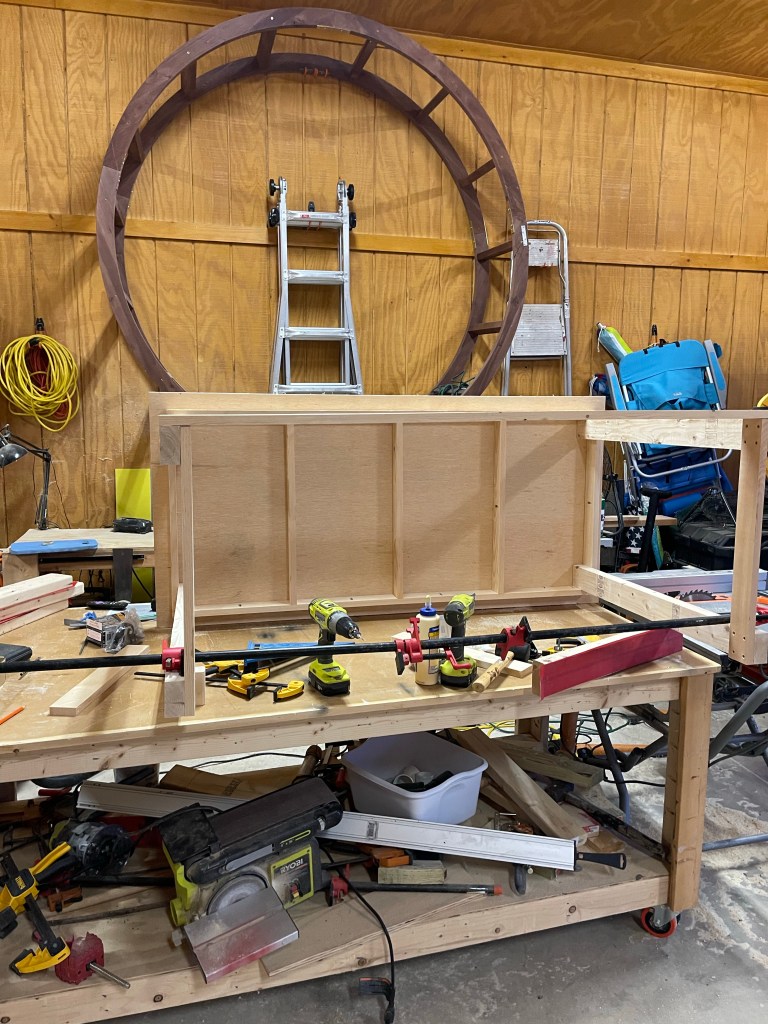
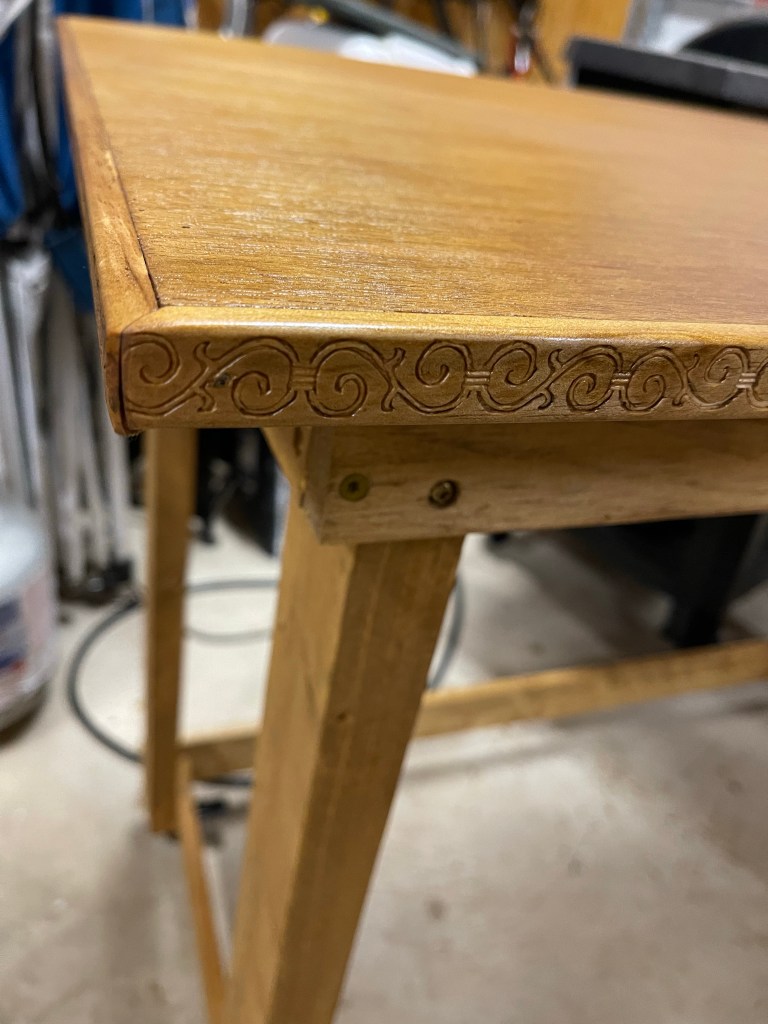
I built this desk from standard lumber from HomeDepot. Let me know what you think about the design of my custom art station. I looked at many desks and art studios from posts on Pinterest to try and come up with a good design.

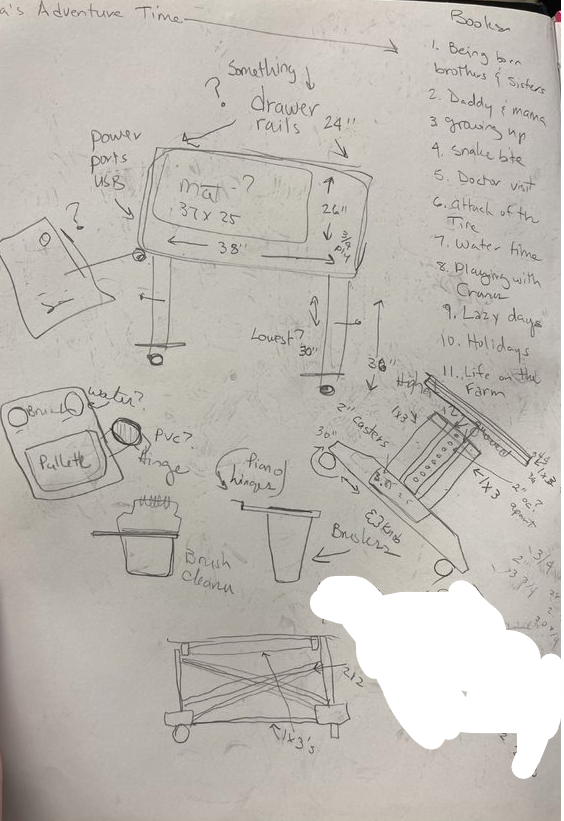
My first rough draft for the desk.

I was originally going to make the desk with the ability to raise up and down about 6 inches but changed my mind and opted for a permanent standing desk with a drafting chair as needed. I purchased a “drafting” style chair from Amazon to have a taller chair I could use when not standing.

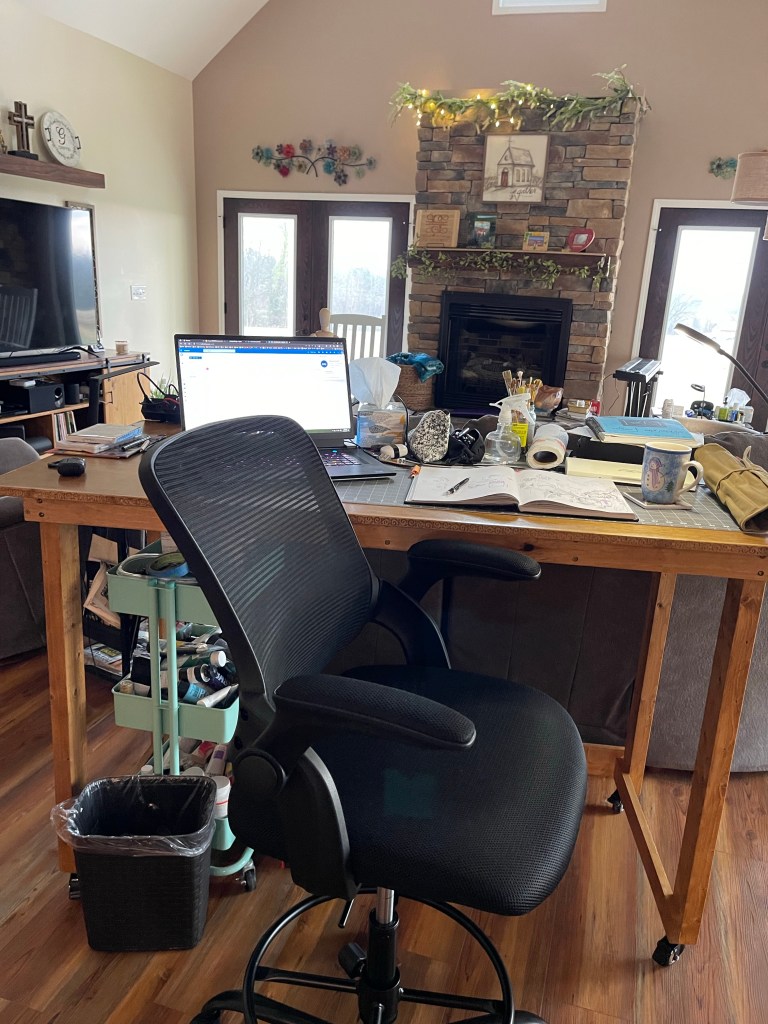
Desk completed and in use

I have completed the desk and now use it as my art station and my computer station to update this website from. I was able to find a power outlet that would easily attach to my desk, and it could be moved if necessary. I found these casters for the desk and found they roll really smooth and makes my wife happy, because she was concerned about them scratching the floor. I hope to get many years of service from this desk and to watch my art skills grow from this desk. I have added some progress photos at the end of this post for your review. Please like and comment.
Getting started with my Art life

It has been a slow journey to get to a point where I want to truly invest in my growth as an artist.

Oh to be sure, I have made many starts and stops with much scribbling and painting through out my life.

At a young age an uncle bought me a couple of pencils and a large art pad back in the early 1970’s and I remember drawing everything I saw. I really remember drawing a pack of Winston cigarettes in great detail. Once I started school the drawing stopped. I tried drawing many times over those school years, but it seemed everyone else around me who could draw did it much better than myself.

I eventually left my hometown and went into the military for a time. I endend up in Germany for a while and discovered the local store had an art section. I purchased some newspaper style art pads and pencils and started drawing again. It was great. Once I left the military I got married and had kids and the drawing stopped again. Many times, I started and stopped drawing. Meanwhile the Intrenet came along, and I found all kinds of resources online for art inspiration.

After 29 years I lost my first wife to a sudden accident and after a time I turned back to Art. I bought brushes, canvases and paint. I spent a lot of time painting and drawing. Hobby Lobby and Michael’s were a frequent stopping place during that season in my life.

A few years later I met a wonderful woman and made her my wife and art kinda took a backseat for a short while, but it is back now, and I want to learn, learn, learn. She is very supportive of my art.

I am a few years away from retirement and want to get myself into a habit of painting and drawing several days a week.

What experiences have any of you had with art in your lifetime?


As a final reminder please like, comment and share this post.

Thanks, Mitchell