Time for a Creative Pursuit

Finding time for creative pursuits like drawing and painting with watercolors can be a wonderful way to express yourself and engage in a fulfilling hobby. Here are some tips to help you make time for your creative endeavors:

  • Prioritize and schedule: Assess your daily or weekly routine and identify pockets of time that you can dedicate to your artistic pursuits. It could be early mornings, evenings, weekends, or any other time that works best for you. Once you determine your available time slots, schedule them in your calendar as dedicated art sessions.
  • Make it a habit: Consistency is key when it comes to nurturing your creativity. Aim to establish a regular practice by setting aside a fixed time each day or week specifically for drawing and painting. Treat it as a non-negotiable appointment with yourself.
  • Embrace small sessions: If finding large blocks of time is challenging, don’t underestimate the power of short, focused drawing or painting sessions. Even 15 minutes a day can add up over time and help you maintain a creative rhythm.
  • Create a dedicated workspace: Set up a designated area where you can keep your art supplies readily accessible. Having a dedicated space not only helps you stay organized but also makes it easier to jump into your creative process whenever you have a few spare moments.
  • Combine art with other activities: Look for opportunities to integrate art into your daily life. For example, you can carry a portable watercolor set and a sketchbook with you and use your lunch breaks or commuting time to create quick sketches or studies.
  • Limit distractions: Minimize distractions during your creative time. Put away your phone, turn off notifications, and create a quiet and focused environment that allows you to immerse yourself in the process.
  • Set goals and projects: Having a specific goal or project in mind can provide motivation and structure to your artistic practice. It could be working on a series of watercolor landscapes, practicing a particular technique, or creating a themed collection. Breaking your larger goals into smaller milestones can help you stay motivated and track your progress.
  • Seek inspiration: Explore various sources of inspiration to keep your creativity flowing. Follow artists on social media, join art communities, visit art galleries, read art books, or even spend time in nature to gather ideas and fuel your artistic imagination.

Remember, the key is to find joy and fulfillment in the process of creating. Embrace your creativity, experiment, and allow yourself to explore different techniques and subjects with watercolor painting. Enjoy the journey and don’t be too hard on yourself. Happy painting!

Red Lamy Safari Pen and Noodlers Black Ink

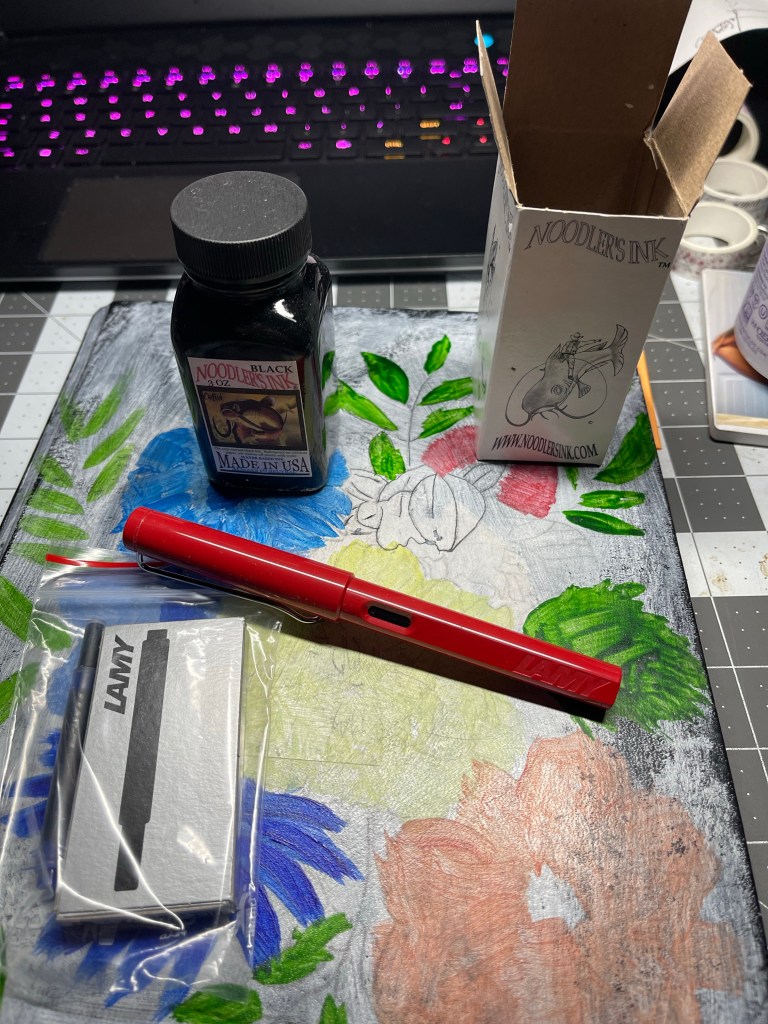
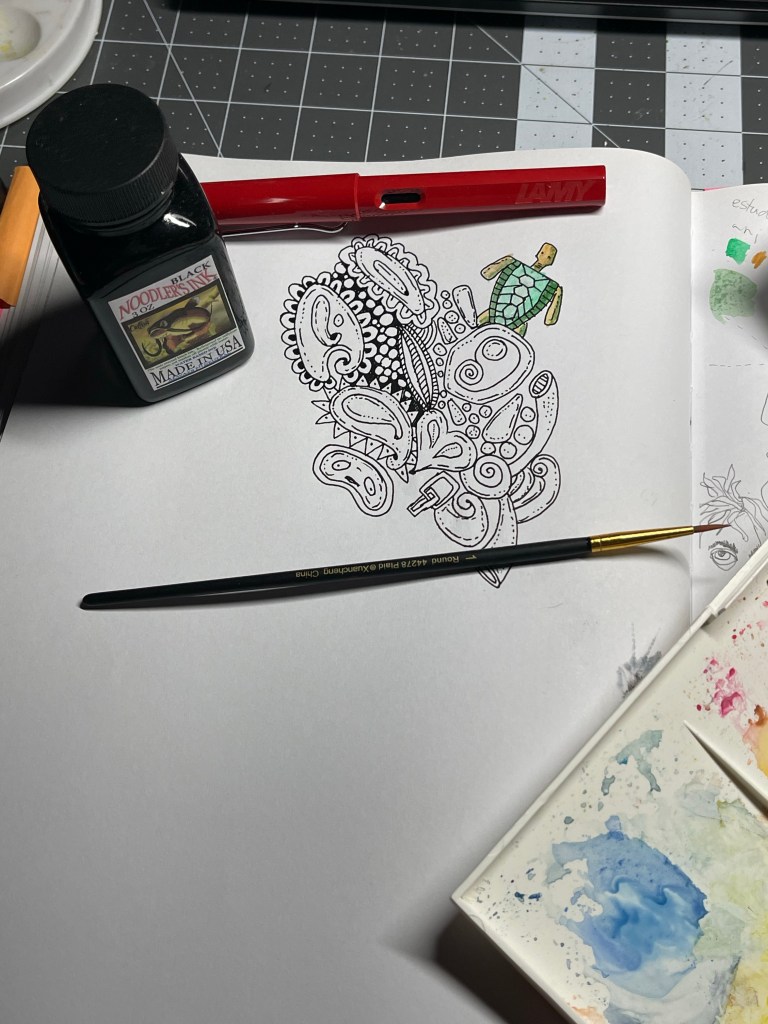
If you’re a fan of fountain pens, you know that a good pen and ink combination can make all the difference in your writing experience. Today, I want to share with you my thoughts on a particular pairing: the red Lamy fountain pen with Noodlers black ink in a bottle and a converter for the pen.

Lamy Safari | Red | Fine Nib + 5 Black Ink Cartridges and Converter

Let’s start with the pen itself. The Lamy fountain pen is a classic choice for fountain pen enthusiasts. It has a sleek design, a sturdy body, and a smooth nib that glides across paper effortlessly. The red color of this particular pen adds a touch of personality to your writing experience and stands out from the more traditional black or silver pens.

Now, let’s talk about the ink. Noodlers black ink is a popular choice for many fountain pen users. It’s a rich, dark ink that dries quickly and doesn’t smudge. It’s also waterproof, so you don’t have to worry about your writing fading or running if it gets wet.

To use Noodlers ink with the Lamy fountain pen, you’ll need a converter. This is a small device that fits into the pen and allows you to fill it with ink from a bottle rather than using disposable cartridges. The converter is easy to use, and it’s a more eco-friendly option than constantly buying and disposing of cartridges.

Together, the red Lamy fountain pen with Noodlers black ink in a bottle and a converter create a writing experience that’s both functional and enjoyable. The smooth flow of the ink complements the effortless writing experience of the pen, and the bold red color adds a pop of personality to your writing.

In conclusion, if you’re a fountain pen enthusiast looking for a reliable pen and ink combination, I highly recommend giving the red Lamy fountain pen with Noodlers black ink in a bottle and a converter a try. It’s a timeless pairing that’s sure to enhance your writing experience.

Learning to use Gouache Paints

As a beginner to gouache painting, I am excited about learning how to use the medium and gain experience as I try to paint with gouache. Gouache is a type of water-based paint that has a unique characteristic of being opaque, which makes it different from other watercolor paints. Here are some tips to get started with gouache painting.

Gouache paints can be found in tubes or pans, and it is essential to choose a good quality set to get started. You will also need watercolor paper, brushes, and a palette for mixing colors. I chose the Himi Gouache Paint with a set of 24 colors. It comes with three brushes, and I have many more brushes I have acquired over the years. I even got this cool canvas brush holder. The Himi Gouache paint set comes with a palette for mixing colors. Fortunately, I have several palettes both plastic and ceramic. Several years back I purchase some small ceramic saucers at a thrift store for very little money. I have several different watercolor paper pads and sheets. I have mainly been using the gouache, practicing really, in my sketchbook which I have no idea what the brand name is for the sketchbook. I have a couple of sets of palette knives I can use for mixing as well.

Gouache paint has a thicker consistency than watercolor, so it can be applied in layers over the previous layer without reactivating the lower layer. Allowing the previous layer to completely dry before applying the next layer and not using as much water and fewer brush strokes. Gouache colors can be mixed much like acrylic and oil paints.

One of the most important aspects of gouache painting is color mixing. It is essential to understand the primary colors and they interact with each other to create secondary and tertiary colors, much like of mediums such as acrylic and oil paints. I have plans to spend time practicing creating color swatch combinations using color swatches I get from stores like HomeDepot and Lowe’s.

Unlike watercolor, gouache allows you to layer colors without worrying about the previous layer reactivating for the most part. You can use this technique to build up the intensity of colors and create depth in your paintings.

As with any new medium, it’s natural to make mistakes. Gouache is a forgiving medium, and you can always paint over mistakes once the paint has dried. This has been my experience with other mediums as well. I have painted over my acrylic paintings more than once.

Gouache painting allows you to explore various techniques, such as wet-on-wet, wet-on-dry, and dry brush. You can also use different brushes to create different effects.

Practice makes progress, and the more you practice, the better you will become at gouache painting and art in general. Try to set aside some time each day to experiment with different techniques and create new paintings. My goal is to spend some time each night to draw and paint. I hope to see improvement over time.

In conclusion, gouache painting can be a fun and rewarding experience for beginners. With the right materials, understanding of the medium, practice, and experimentation, you can create beautiful paintings using gouache. So, grab some paints, paper, and brushes, and start creating!

Paint and Brushes

Over the last few years, I have acquired an assortment of paint, palettes, brushes, easels, canvases, art boards and various other art related products. I wanted to share with you some of the products I have bought over the years.

I recently bought a “jelly” gouache paint set which looks awesome. I have not had a chance to use it much, but I can’t wait to see what the paint looks like on a drawing I have made.

Several years back I purchase a watercolor set, Winsor & Newton Cotman Watercolor Studio Set with 45 Half Pans and I have truly enjoyed using the paints from it. I really like this pan as my travel set when we go on vacation. I like to doodle and use the watercolor paint.

I have a large assortment of brushes ranging from very cheap to mildly expensive. I have several palettes along with palette paper and even a wet palette for acrylic.

I really think my focus for right now is experimenting with watercolor and journaling and drawing.

I have to find the time to build my mobile art workstation soon. I have all the materials needed and just need to commit the time to get it done.

For palettes, I have the standard ones you get from the art stores, and I have several small “China” dishes I use and really like for mixing a single colors in.

What do you guys use for palettes? Brushes? Paints? Post your comments.